New Script, New Director
Four halvings, three different outcomes. The 2024 halving delivered the weakest supply shock on record — while demand-side control has shifted from crypto natives to Washington. When supply deflation meets geopolitical inflation, who writes Bitcoin's next chapter?
The Fourth Halving: The Weakest Return on Record
On April 19, 2024, Bitcoin completed its fourth halving, cutting the block reward from 6.25 to 3.125 BTC. By the script that played out three times before — supply halves, demand follows, price goes exponential — the market should have exploded within 12 months. After the 2012 halving, BTC surged about 8,858% in 12 months. After 2016, over 300%. After 2020, approximately 567%. And after 2024? Just 31.2%. The weakest post-halving return in Bitcoin's history.
The problem isn't on the supply side. The halving happened on schedule, and the supply shock is real. The problem is demand — and demand's new boss doesn't live on Crypto Twitter. It lives in Washington.
The Economic Policy Uncertainty Index averaged between 107 and 186 in the six months following previous halvings. After the 2024 halving? 317. Supply got cut in half. Geopolitical uncertainty doubled.
Washington Took Over the Demand Side
The 2024–2026 cycle is the first time US geopolitical decisions have dominated BTC price action to this degree. During the "Liberation Day" tariff period in April 2025, BTC suffered a cumulative 10% decline over several days, breaking below $78,000, while ETH dropped 25% in three days — demonstrating that the immediate impact of liquidity panics now far outweighs the slow-burn effect of supply reduction. When Operation Epic Fury launched in February 2026, BTC fell from $68,000 to $63,000 with $358 million in liquidations. Iran closed the Strait of Hormuz — the chokepoint for 20% of global petroleum — sending Brent above $115 and WTI past $100. Then on April 8, 2026, Trump called for a two-week ceasefire; the Dow surged over 1,300 points in a single session. Ceasefire real or not, BTC bounced from $70,500 and briefly surged past $72,000.
While single-day fluctuations shouldn't be over-simplified into mono-causality, geopolitical sentiment is undeniably the most disruptive macro variable in the current micro-structure.
The First Three Halvings: The Golden Age of Supply-Driven Cycles
Rewind to the three previous halving cycles, and geopolitics was never the main character. In 2012, BTC was a cypherpunk experiment — the Arab Spring was raging, but it had zero bearing on price. The 2016 halving saw Brexit and Trump's election cause short-term ripples, but the narrative was still supply-driven: halving → supply contraction → speculative demand floods in → blow-off top → crash. The 2020 cycle was even cleaner: pandemic → unlimited QE → global M2 explodes → BTC rockets from $8,700 to $69,000. The supply shock met the largest demand stimulus in history.
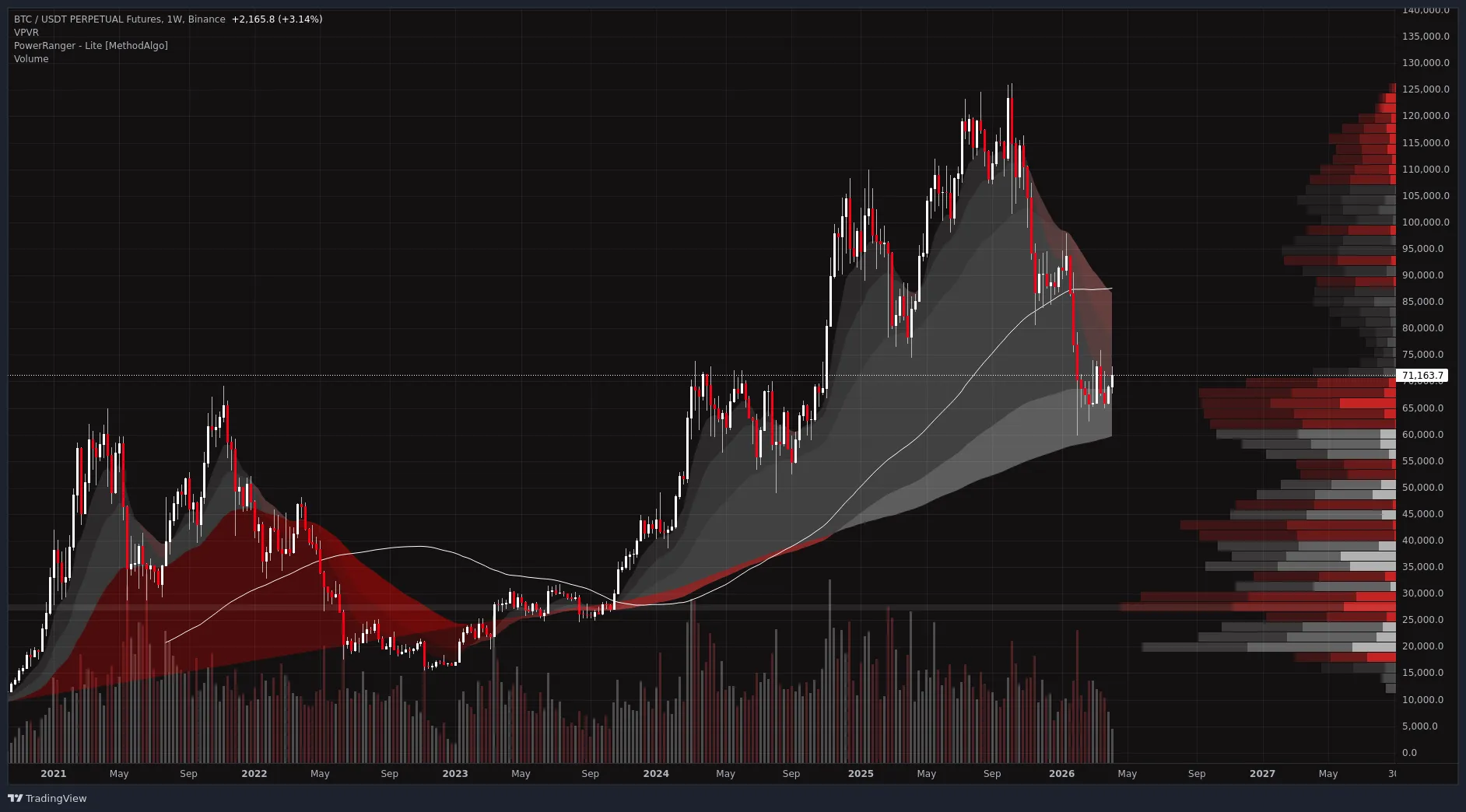 BTCUSDT.P · Weekly
2024: The Script Breaks
The 2024 halving broke the script. Not because the halving stopped working, but because the demand-side story was entirely rewritten by geopolitics. Trump 2.0's tariff regime, the US-Iran military standoff, escalating tech sanctions against China — every single one compresses global liquidity expectations. BTC's 10-week lead correlation with global M2 still holds, but M2 itself is now held hostage by geopolitical decisions. Central banks want to ease, but inflation expectations are pushed higher by tariffs and oil prices. They can't. This is the core contradiction of the 2024–2026 cycle: the halving creates supply deflation, but geopolitics creates the expectation of demand inflation. They pull in opposite directions.
The 2022 Russia-Ukraine war was Bitcoin's first real geopolitical stress test. BTC crashed from $39,000 to $34,322 within hours, then bounced to $44,000 within days. Over the course of more than a year following the outbreak of the war, Ukraine raised over $210 million in crypto to fund its effort. Russian citizens, cut off from SWIFT, turned to crypto as an exit route. Bitcoin's identity as a "hedge tool" was confirmed in live combat — but so was its entanglement with traditional risk assets. BTC fell 65% in 2022, not primarily because of the war, but because the Fed initiated its most aggressive hiking cycle in decades. Geopolitics creates entry windows; global liquidity expansion and contraction determine the macro trend.
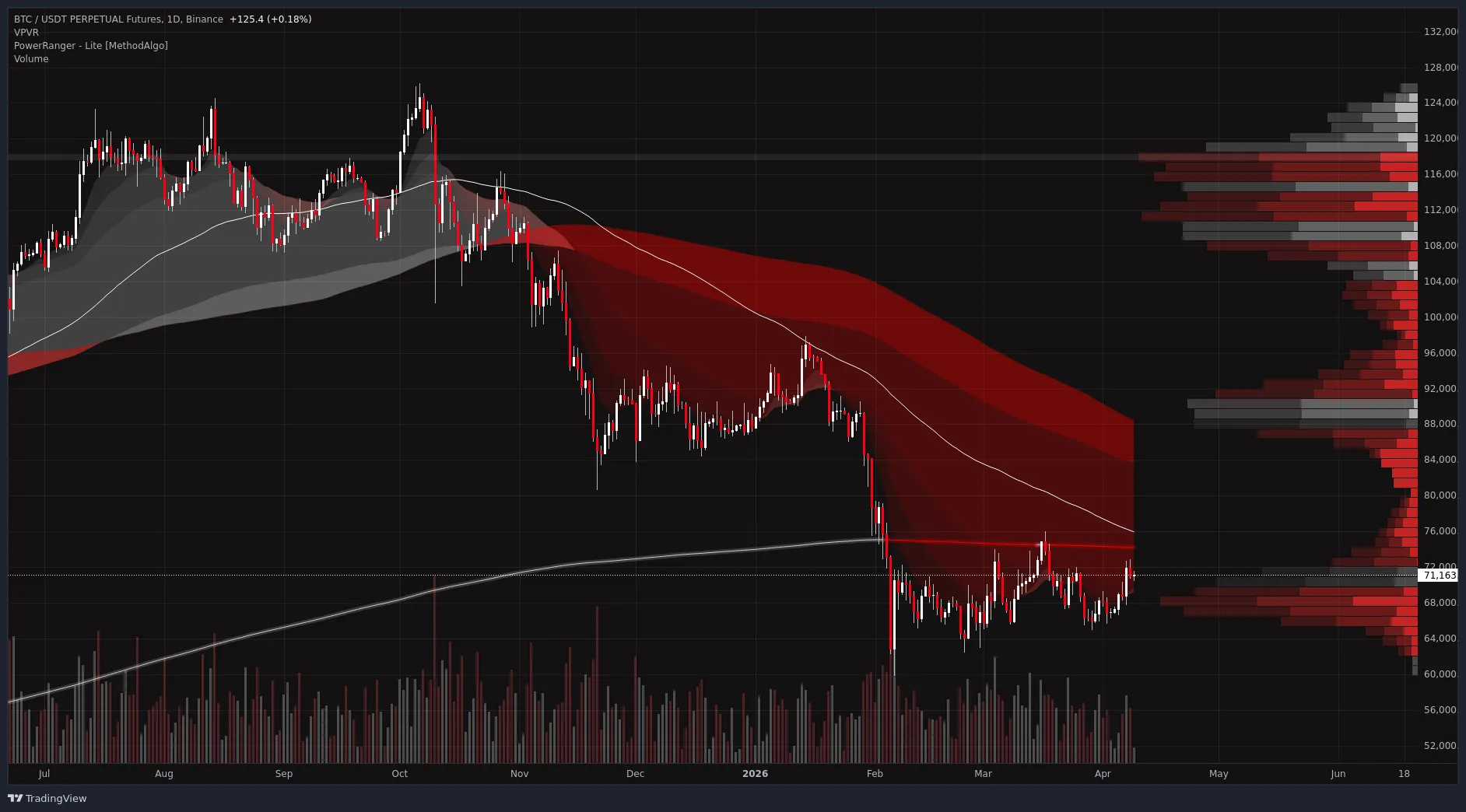 BTCUSDT.P · Daily
Are Miners Still Carrying the Halving Narrative?
Nobody is asking this, but they should be. The halving supply-shock narrative has a hidden premise: miners are forced to sell fewer new coins, so selling pressure naturally decreases. But the data says otherwise.
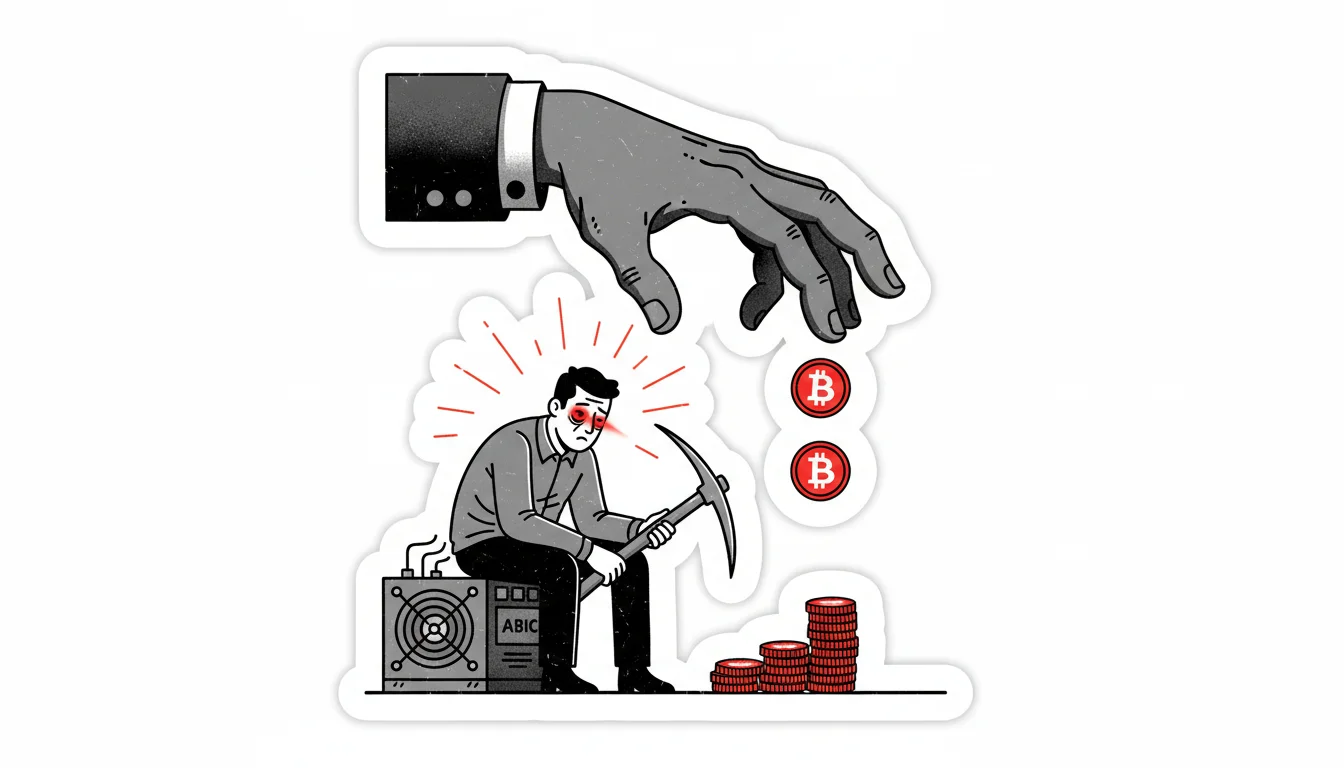
The 2024 halving cut BTC's annual inflation rate from 1.7% to 0.85% — halved, yes, but the absolute number is already negligible. 94% of all BTC has been mined. Daily new issuance is roughly 450 BTC, about $32 million at $71,000. BlackRock's ETF sees single-day net inflows ten times that amount. The supply shock has degraded from "structural halving effect" to "a number institutions absorb before lunch."
Miner fee revenue has fallen off a cliff. In the first year after the 2020 halving, miners collected 37,000 BTC in transaction fees. After the 2024 halving? Just 8,000 BTC — a decline of nearly 80%. Hash rate hits all-time highs, but hash rate up without price up means miner margins are being squeezed to the extreme.
The halving narrative depends on miners' "forced hoarding" to create supply tightness. But when ETFs and institutional flows absorb the entire halving-reduced supply in a single day, miners' behavior is no longer the marginal price-setter. Onramp Research tested this directly: when halving variables are regressed alongside M2, DXY, and real yields, the halving's independent explanatory power becomes "fragile."
Arthur Hayes put it more bluntly: Bitcoin's traditional four-year cycle is over — liquidity policy, not halving events, now drives price.
Gold Is Sprinting. Bitcoin Is Hesitating.
The 2026 divergence between BTC and gold is the single most important signal for understanding this cycle.
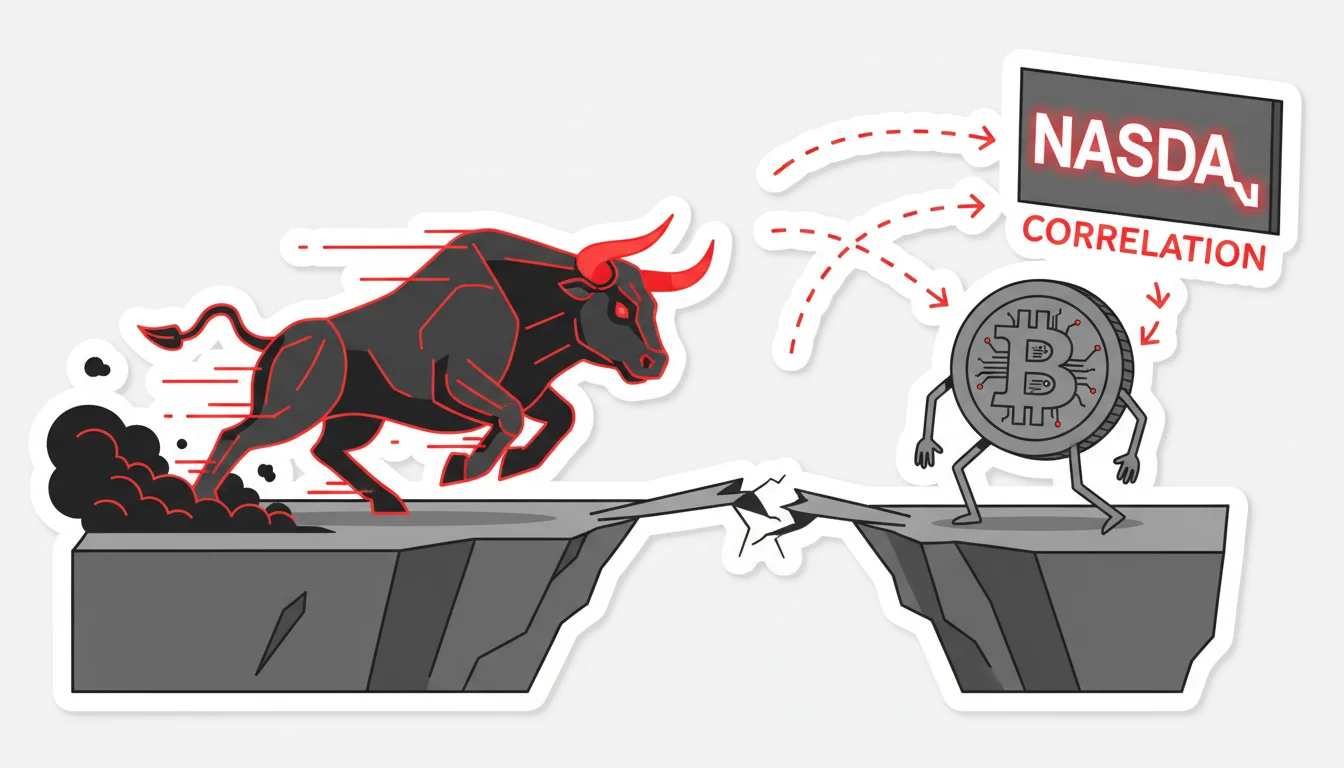
Gold has rocketed to $4,900 all-time highs, up over 25% year-to-date. BTC? Down 44% from its ATH, grinding around $71,000. While the divergence is stark, one must admit that a "safe haven" status is not a binary switch. Gold is a mature fiat hedge, while BTC currently acts more like an "evolving digital option": it gets liquidated as a risk asset during initial panics but exhibits far superior recovery elasticity during liquidity restoration phases.
Convergence requires BTC to prove it can decouple from the Nasdaq during geopolitical shocks. So far, it hasn't. Every military escalation sends BTC down like a high-beta tech stock. This doesn't mean "Digital Gold" is a marketing scam; it means it is a dynamic, evolving safe haven whose value proposition is slowly formalizing with institutional adoption, yet has not demonstrated cross-cycle stability under extreme pressure.
The Next Catalyst: Three Scenarios
The halving is written in code. It executes on schedule, every four years. Geopolitics obeys no calendar. Right now, BTC sits at $71,000. The supply contraction from the halving is priced in. The demand-side script is still being written between Washington and Tehran. Specifically, we derive three stress-test scenarios based on a matrix of global inflation resilience and geopolitical intensity:
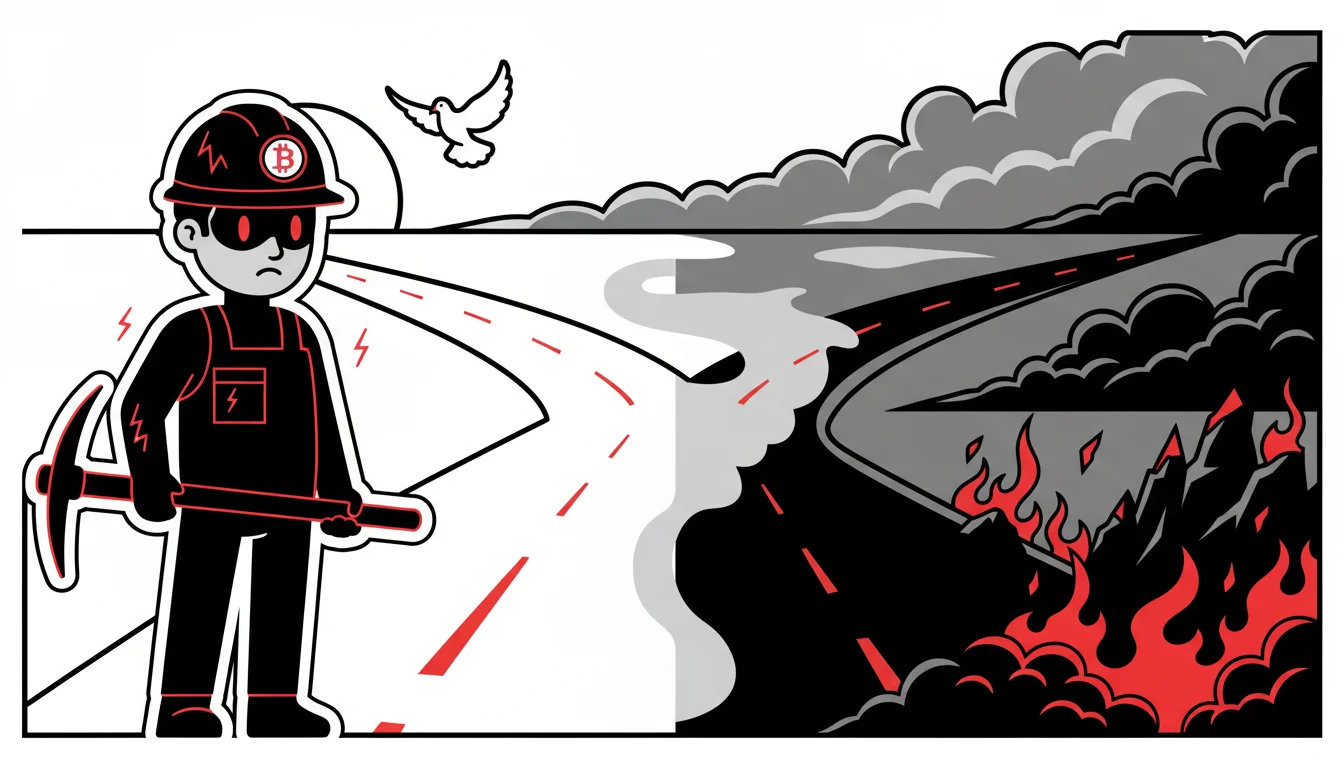
Scenario 1: Diplomatic Cooling (Probability: ~35%) — The Easing Relief If Trump's ceasefire proposal moves into substantial execution, oil could retreat to the $75 range. Inflation expectations would cool, and the Fed's focus would shift from fighting inflation to preventing recession. Rate cuts open up, real yields decline, and BTC would be the first to benefit from valuation repair. In this case, BTC's gains come primarily from a liquidity premium; the halving scarcity serves merely as a supportive backdrop.
Scenario 2: Escalation (Probability: ~40%) — The Convex Moment of Forced Easing This is the most explosive upside case. If a closure of the Strait triggers a global energy crisis, the Fed might be forced to replicate its March 2020 playbook—implementing "defensive massive cuts" to prevent a financial collapse despite stagflationary pressures. This is when the halving truly matters: it is BTC's "absolute scarcity" hole card. When geopolitics forces infinite liquidity into the system, the post-halving low inflation rate acts as a Convexity Multiplier for price. BTC doesn't move because of the halving; it moves because the post-halving supply curve is the most sensitive to a liquidity flood. BTC could rapidly reclaim $150,000+.
Scenario 3: Stagflationary Trap (Probability: ~25%) — The Boiled Frog Ceasefire fails, but war doesn't escalate to a climax. Oil stays high at $90-$100. Stubborn inflation forces the Fed to maintain "Higher for Longer," and the economy falls into a 1970s-style structural trap. This is BTC's worst environment: no liquidity catalyst, and the halving's marginal effect is neutralized by miner capitulation. Price could grind between $60,000-$80,000 until 2027.
Beyond geopolitics, we must remain vigilant regarding regulatory shifts (such as the latest SEC crackdown on non-custodial wallets), negative feedback loops from massive ETF redemptions, and security risks from hash rate centralization. In today's complex micro-structure, mono-causal judgments are a dangerous trap.
Where's the Direction?
Across all three scenarios, the core variable is the same: when the Fed gets backed into a corner. Geopolitics' transmission chain through oil → inflation → monetary policy is the axis that determines BTC's direction. Bitwise has tracked post-geopolitical event bounces, but all such data carries a vital caveat: the liquidity environment must eventually permit the rebound. The 2022 lesson: if macro trends are tightening, geopolitical bounces can be completely overridden by the primary trend.
The signals to watch aren't on-chain. They're three macro indicators: DXY (Dollar Index), global M2 momentum, and 10-year real yields.
The halving gives BTC a floor — supply is shrinking. Geopolitics sets the ceiling — when liquidity returns. And how liquidity returns determines whether BTC rips higher or grinds sideways. War ends, BTC benefits from inflation-unchained rate cuts. War escalates, BTC benefits from forced emergency easing. Only stalemate is bad — because stalemate means no catalyst.
The halving cycle is still alive, but it has gone from the steering wheel to the chassis — providing support, no longer determining direction.